Check your understanding · Keep practicing signs
Check your understanding
Choose one answer, then select “Check answer” to see the explanation. These four short learning checks accompany the article; they are not a full theory test.
Priority and give-way signs

Priority road (Forkjørsveg) 206
Meaning: Traffic from side roads or crossing roads is required to yield by a give-way or stop sign. The priority road continues until sign 208, 202 or 204 ends it.
Notice the difference: Priority at a junction (210) concerns a junction; a priority road (206) covers a stretch of road. Read any supplementary diagram showing how the priority route runs through a junction.
Warning signs
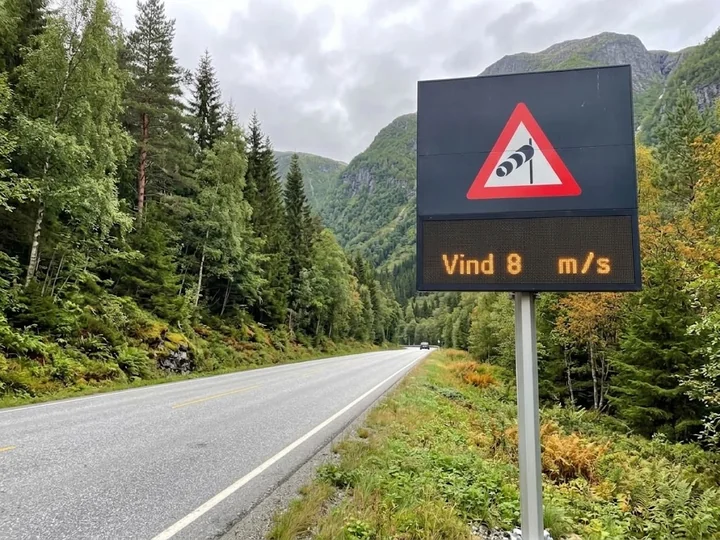
Crosswinds (Sidevind) 152
Meaning: Warns of a location where strong crosswinds often occur. Be prepared for wind to affect the vehicle and adjust your speed.
Notice the difference: The windsock means crosswinds, not low-flying aircraft. The number on this electronic board is a wind reading, not a speed limit.
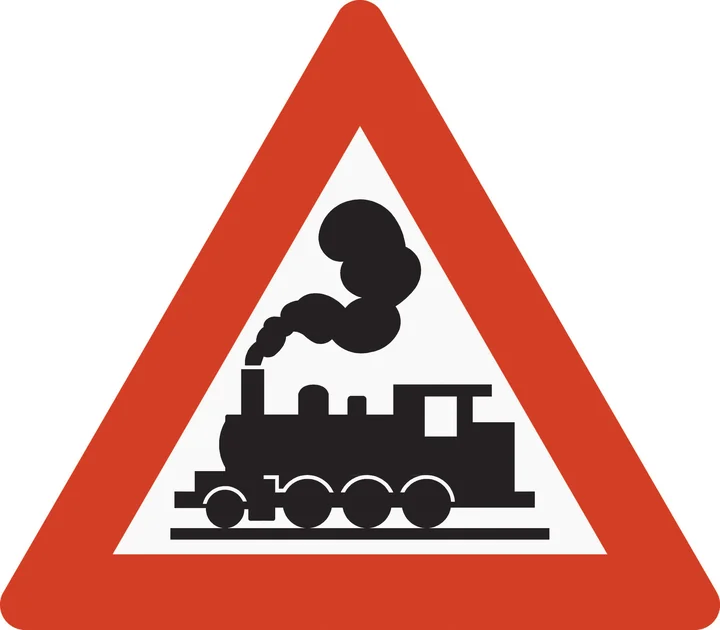
Level crossing without barriers (Planovergang uten bom) 135
Meaning: Warns of a railway level crossing without barriers. Look and listen for trains and obey any signals.
Notice the difference: Sign 134 depicts a barrier and warns of a crossing with barriers. Sign 135 depicts a train. No barriers does not mean there are no light signals.
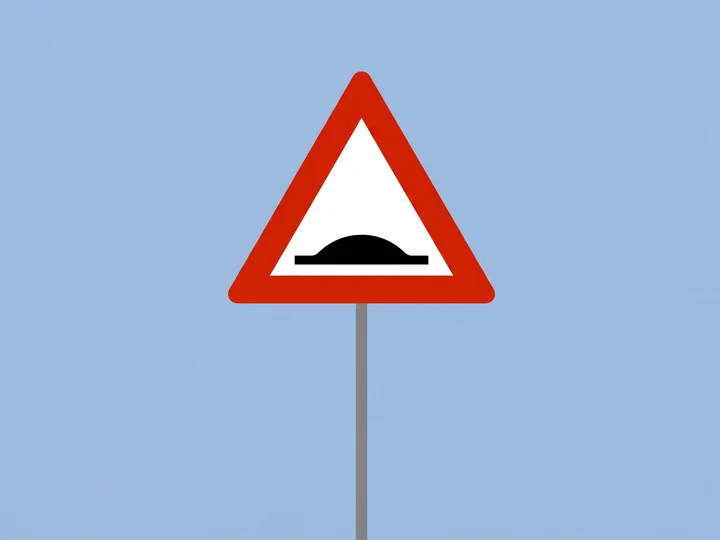
Speed hump (Fartshump) 109
Meaning: Warns of a speed hump. Adjust your speed before reaching the hump.
Notice the difference: The single raised hump distinguishes sign 109 from uneven road (108). This warning does not itself set a numerical speed limit.
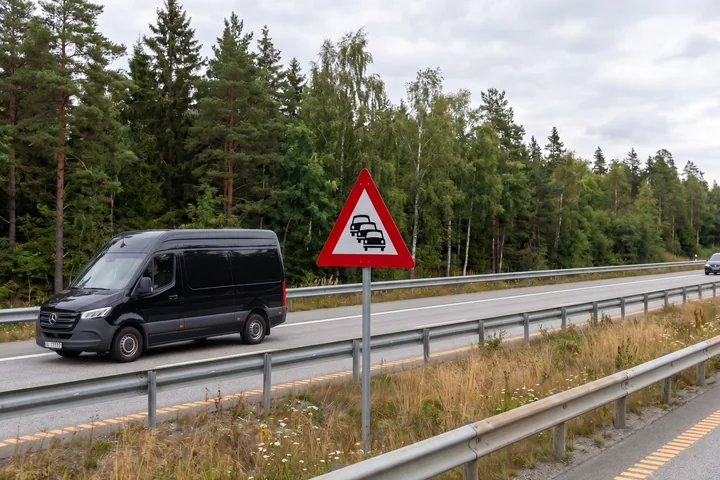
Traffic queues (Kø) 149
Meaning: Warns of traffic queues. Watch for traffic slowing or stopped ahead.
Notice the difference: The line of cars inside the triangle is a hazard warning. It is not a stopping or parking prohibition.
Prohibitory signs
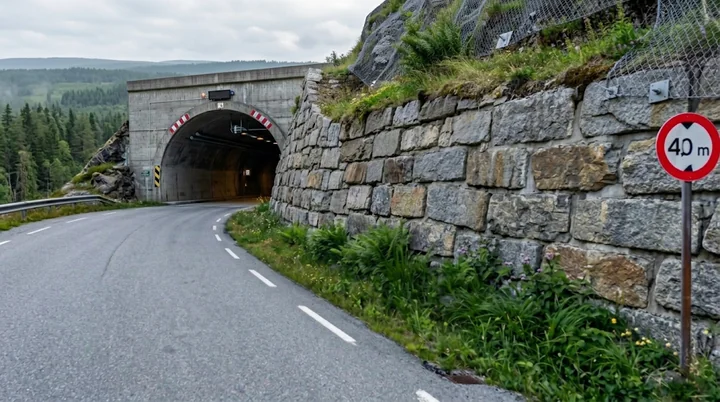
Height limit (Høydegrense) 314
Meaning: Vehicles taller than the stated limit, including their load, may not pass. This example shows a 4.0-meter limit.
Notice the difference: The arrows point up and down: include any roof load when checking height. A width limit has horizontal arrows and concerns a different measurement.
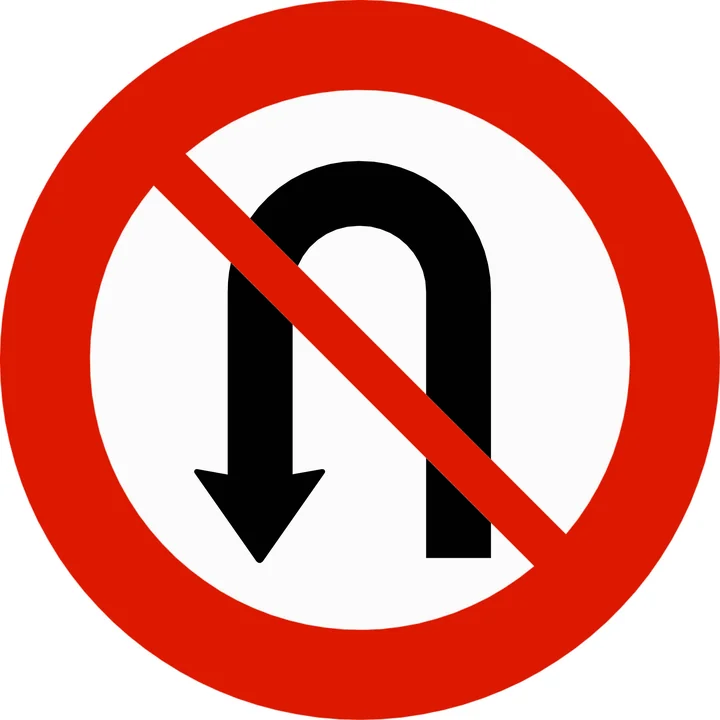
No U-turn (Vendingsforbud) 332
Meaning: Prohibits a U-turn to drive back in the opposite direction. The prohibition includes the first junction.
Notice the difference: The U-shaped arrow differs from a left-turn arrow. Sign 332 prohibits U-turns; check other signs and rules before making a left turn.
Information signs
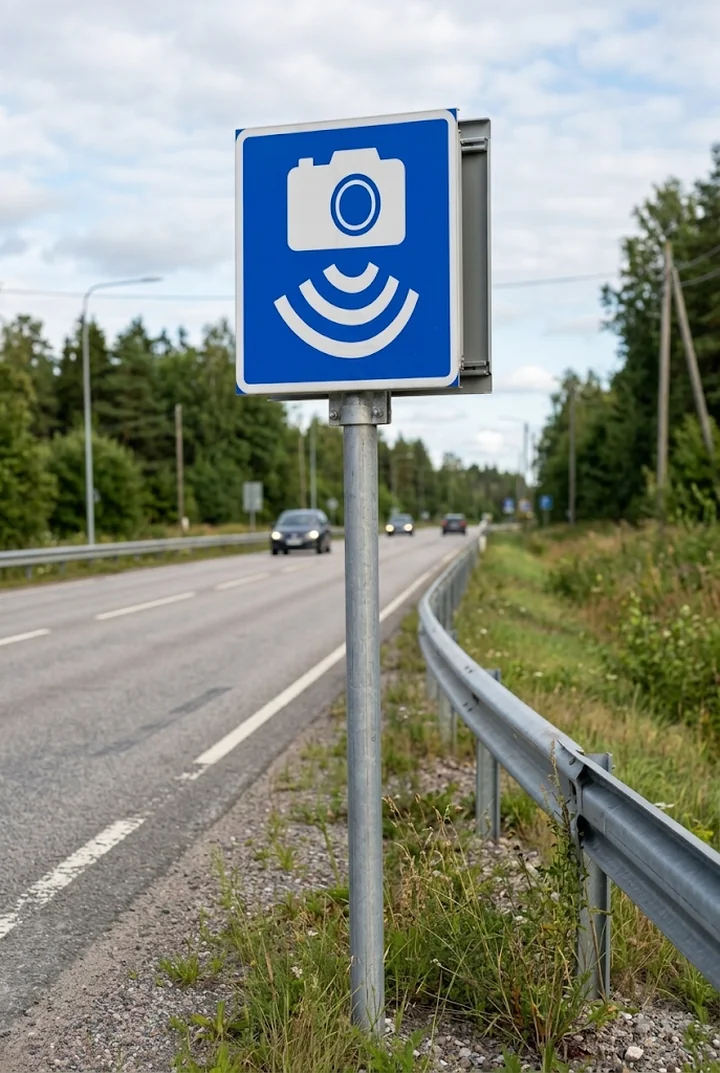
Speed camera: spot measurement (Automatisk trafikkontroll) 556.1
Meaning: Indicates automatic speed enforcement at a point. Follow the applicable speed limit throughout your trip.
Notice the difference: 556.2 indicates section enforcement, which measures average speed between two points. The camera symbol is not a photography prohibition.
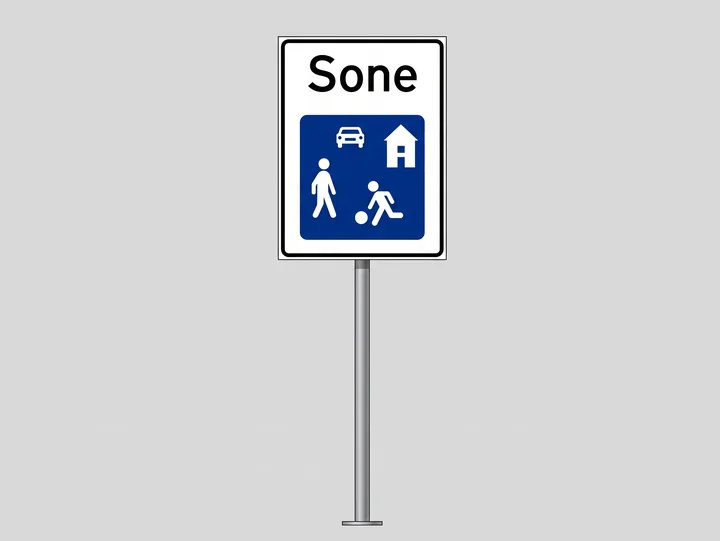
Living street (Gatetun) 540
Meaning: In a gatetun, drive at walking speed and yield to pedestrians. Parking is allowed only in specifically designated places.
Notice the difference: This is more than an ordinary residential neighborhood. Sign 540 introduces gatetun rules until the end sign (542). Walking speed is not a general 30 km/h limit.
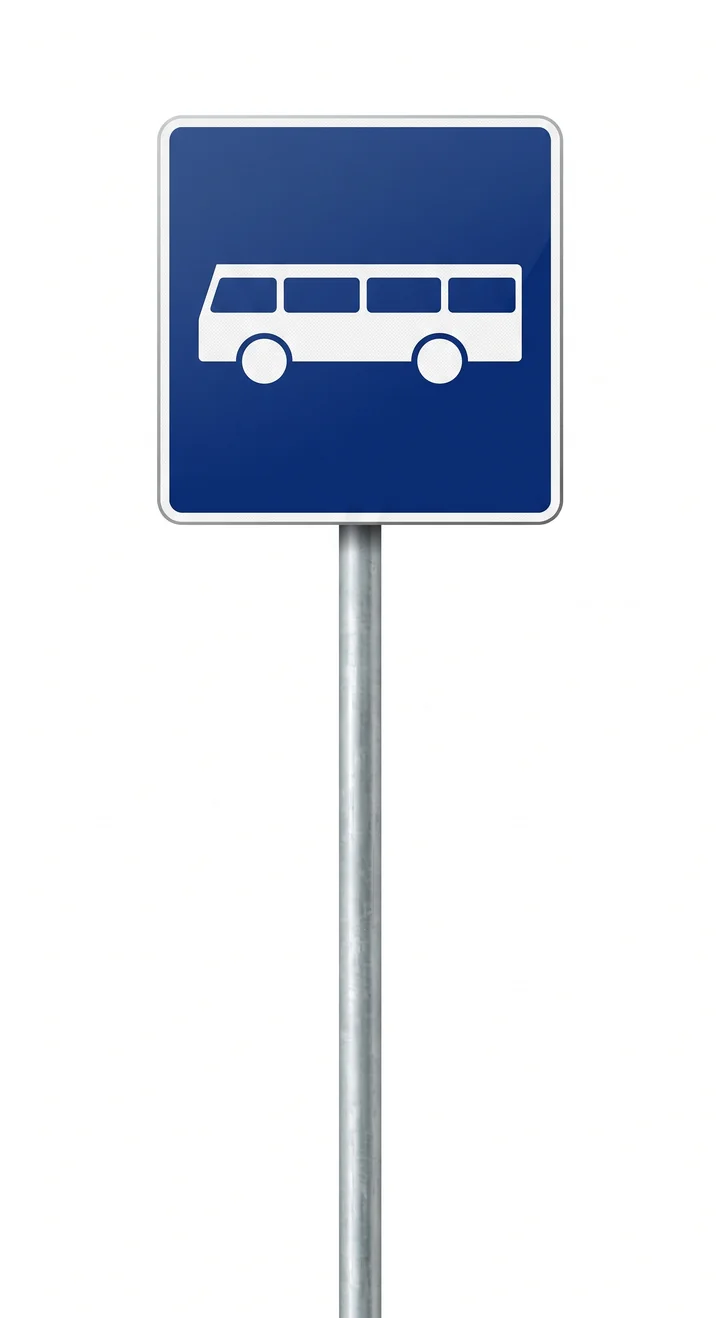
Bus lane (Kollektivfelt for buss) 508.1
Meaning: Marks the start of a bus lane. Other vehicles may be permitted under the traffic rules; always read any supplementary signs.
Notice the difference: Sign 508.2 also says Taxi. A bus symbol alone neither admits every private car nor marks a bus stop (512).
You have answered all four questions. Review the explanations before continuing to practice.
Sources and pictures
Sign names, numbers and rules were checked against Statens vegvesen and the Norwegian sign regulations. Pictures come from DrivingNorway’s existing practice assets. The study suggestions are our editorial advice.